Source Automatic Commercial Sausage Smoker for Factories, Catering, Butchers
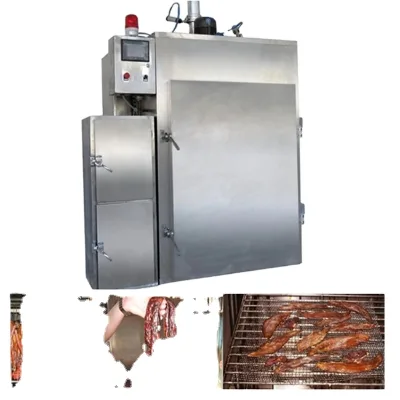
Compare 30 models of the automatic commercial sausage smoker designed for meat processing factories, catering services, and butcher shops. These units offer electric power sources with customizable smoking, steaming, and drying functions to meet diverse production needs.
Key considerations
Products List



Comprehensive Sourcing Guide
Strategic Sourcing Guide for Automatic Commercial Sausage Smokers
Selecting the right automatic commercial sausage smoker is a critical decision for any food processing operation aiming to scale production while maintaining product consistency. The core keyword "automatic commercial sausage smoker" points to a specialized category of thermal processing equipment designed to integrate smoking, steaming, and drying functions into a single automated workflow. Buyers must navigate a complex landscape of technical specifications, power requirements, and capacity metrics to ensure the selected unit aligns with their specific production volume and facility constraints. This guide provides a structured approach to evaluating these machines based on verified industry data and procurement best practices.
Technical Specifications and Operational Capabilities
The foundation of any successful procurement lies in a precise understanding of the machine's technical architecture. Automatic commercial sausage smokers are defined by their ability to manage multiple thermal processes simultaneously. The core functionality typically includes smoking, steaming, and drying, allowing for versatile product development without requiring separate equipment lines. The automation grade is a primary differentiator; modern units operate as fully automatic systems, reducing manual labor and minimizing human error in temperature and humidity control.
Power consumption and source are vital for facility planning. Data indicates that these units generally operate on a 380V electric power source, which is standard for industrial machinery in many regions. However, total power ratings can vary significantly depending on the model and capacity. For instance, larger industrial units may require approximately 10.35kW of total power, while mid-range models might operate at around 6.85kW. Buyers must verify the specific power draw of the model they intend to purchase to ensure their electrical infrastructure can support the load without requiring costly upgrades.
Capacity is another critical variable. The production volume is often expressed in kilograms per furnace cycle. Available data shows models with capacities ranging from 250kg to 500kg per furnace. This range allows buyers to select a unit that matches their batch size requirements. A 500kg capacity unit, for example, offers a significant throughput advantage over a 250kg unit, but it also necessitates a larger footprint and higher utility consumption.
Dimensional constraints are equally important for factory layout planning. The physical size of the smoker determines the space required for installation and maintenance access. Observed dimensions for high-capacity units can reach approximately 2700mm in length, 1500mm in width, and 2720mm in height. Smaller models may have a length of around 1440mm while maintaining similar width and height profiles. Additionally, some configurations include a host size that may differ from the furnace dimensions, such as a host size of 2160mm by 2560mm by 2860mm, which must be accounted for in the overall facility design.
Pressure Systems and Thermal Performance
The internal environment of a commercial sausage smoker is regulated by a complex system of air and steam pressures. Effective smoking and steaming require precise control over air pressure, which is typically maintained at levels greater than 0.4MPa. This pressure ensures that smoke and heat are distributed evenly throughout the chamber, preventing cold spots that could lead to inconsistent product quality.
Steam pressure is another critical parameter. The system is designed to operate with high-pressure steam ranging between 0.3MPa and 0.6MPa. This range allows for flexible cooking profiles, from gentle steaming to rapid heat penetration. The equipment also manages low-pressure furnace conditions, often operating at temperatures around 100℃ for specific stages of the process. Conversely, high-pressure furnace temperatures are controlled to remain below 85℃ in certain configurations, ensuring that the product is not overcooked or dried out prematurely.
Air consumption rates are directly linked to the efficiency of the smoking process. Larger units with higher capacities generally consume more air, with observed rates of 150kg per hour for 500kg capacity models. Smaller units may require only 75kg per hour. Water pressure requirements are also specified, typically needing a supply greater than 0.2MPa to ensure adequate steam generation and cleaning cycles.
Ignition time is a performance metric that affects operational efficiency. A high-performance unit should achieve smoke ignition in less than 4 minutes, allowing for quick start-up and reduced downtime between batches. The weight of the equipment is also a logistical consideration; industrial units can weigh up to 2800kg, while smaller models may weigh around 1800kg. These figures are essential for planning floor loading and transportation logistics.
Compliance, Certification, and Safety Standards
In the food processing industry, compliance with safety and quality standards is non-negotiable. Buyers must verify that the equipment meets international safety certifications. The CE certification is a recognized standard for products sold within the European market and is often a baseline requirement for reputable manufacturers. While other standards such as ISO 9001, ISO 14001, and ISO 45001 are frequently cited in the industry, buyers should confirm the specific certification status of the supplier and the machine model rather than assuming compliance based on general market knowledge.
Material composition is a key factor in food safety and durability. The primary construction material for these units is typically stainless steel, which offers resistance to corrosion and ease of cleaning. This material choice is critical for maintaining hygiene standards and preventing contamination. The HS Code for these machines is generally categorized under 8438500000, which assists in customs clearance and tariff classification.
The control mode of the machine also impacts safety and ease of use. Most modern units utilize a button-based control system, providing a user-friendly interface for operators. However, the complexity of the control panel should be matched to the skill level of the workforce. An operation manual book is typically included with the purchase, serving as a vital resource for troubleshooting and operational procedures.
Cost Drivers and Procurement Economics
The cost of an automatic commercial sausage smoker is influenced by several factors, including capacity, power rating, and material quality. The observed price range for these units spans from 800 USD to 38,000 USD. This wide variance reflects differences in capacity, automation levels, and brand positioning. Buyers should not view the lowest price as the most economical option if it compromises on critical features like capacity or material quality.
Minimum Order Quantity (MOQ) is another economic factor. Data suggests that the MOQ for these units is typically 1 set, making them accessible for small to medium-sized enterprises as well as large factories. However, buyers should be aware that while the MOQ is low, the total investment includes shipping, installation, and potential customization costs.
Customization is a significant driver of cost and value. Many suppliers offer customization options, allowing buyers to tailor the machine to specific production needs. The "Customized" attribute indicates that the equipment can be modified, but buyers must clarify the scope of these modifications and any associated costs. The packing method, often a wooden box or wooden cases, adds to the overall cost and must be considered in the logistics budget.
Supplier Evaluation and Geographic Considerations
When evaluating suppliers, buyers should look for manufacturers with a proven track record in the meat processing sector. The company type should be identified as a manufacturer rather than a trading company to ensure direct access to technical support and spare parts. Geographic location is also relevant; suppliers are often located in regions known for food processing equipment manufacturing, such as Hebei or Shandong in China.
The origin of the product and the location of the factory can impact lead times and shipping costs. Buyers should verify the specific origin, such as "China" or specific provinces, to understand the supply chain dynamics. The application scope of the machine, which includes meat processing factories, catering services, and butcher shops, should align with the buyer's intended use case.
Transportation and packaging are critical for ensuring the machine arrives in perfect condition. Export standard packaging is common, often involving wooden cases to protect the equipment during transit. Buyers should verify the specific packing details, such as whether the machine is packed in wooden cases or boxes, to ensure it meets their shipping requirements.
Quality Control and Long-Term Procurement
Quality control is paramount in the procurement of industrial food equipment. Buyers should request detailed test results and performance data before finalizing a purchase. While specific test results may not always be publicly available, the inclusion of an operation manual and the presence of certifications like CE serve as indicators of quality assurance.
Long-term procurement considerations include the availability of spare parts and the reliability of the manufacturer. The model number, such as HR-QZX500IV or SYX-500, serves as a unique identifier for ordering parts and accessing technical support. Buyers should ensure that the manufacturer provides a comprehensive warranty and after-sales service.
The delivery time is another factor to consider. While some suppliers may list "Actuals" for delivery time, buyers should seek a concrete timeline to plan their production schedules effectively. The lead time can vary based on the customization level and the manufacturer's current workload.
Typical Applications and Process Integration
Automatic commercial sausage smokers are designed for a variety of applications within the food industry. The primary function is the thermal processing of meat products, specifically sausages. The machine's ability to perform smoking, steaming, and drying makes it suitable for a wide range of products. The application scope extends to meat processing factories, catering services, and butcher shops, highlighting its versatility.
The integration of the smoker into the production line requires careful planning. The machine's dimensions and weight must be compatible with the existing facility layout. The power requirements must be met by the facility's electrical system. The air and water pressure requirements must be satisfied by the plant's utility infrastructure.
In conclusion, sourcing an automatic commercial sausage smoker requires a meticulous approach that balances technical specifications, compliance requirements, and economic factors. By focusing on verified data and avoiding unverified claims, buyers can make informed decisions that ensure the long-term success of their food processing operations. The key is to select a unit that matches the specific capacity, power, and material needs of the operation while ensuring compliance with all relevant safety and quality standards.
FAQs
What is the capacity range for these automatic commercial sausage smokers?
The capacity ranges from 250kg to 500kg per furnace cycle. Buyers can select a 250kg model or a larger 500kg unit depending on their specific batch size requirements and production volume needs.
Can these units operate with 380V electric power sources?
Yes, these units operate on a 380V electric power source. Total power consumption varies by model, with some units requiring 10.35kW while others operate at 6.85kW to match facility infrastructure.
What certifications are available for these smoking and steaming machines?
The equipment is available with CE certification. Buyers should verify the specific certification status of the supplier and model rather than assuming compliance with other standards like ISO 9001 based on general market knowledge.
How is the minimum order quantity determined for these smokers?
The minimum order quantity is typically 1 set. This low MOQ makes the equipment accessible for small to medium-sized enterprises as well as large factories without requiring bulk purchases.
Which dimensions are standard for the 500kg capacity model?
The 500kg capacity model has dimensions of 2700mm by 1500mm by 2720mm. Smaller models may have a length of 1440mm while maintaining similar width and height profiles for different facility layouts.
What materials are used to construct these automatic sausage smokers?
The primary construction material is stainless steel. This material offers resistance to corrosion and ease of cleaning, which is critical for maintaining hygiene standards and preventing contamination in food processing.